

Sixty-four paise of every ad rupee now goes to digital
The country's most-quoted ad-spend report says digital took 60% of the market in 2025 and is heading for 64%. The average is real. Whether it describes your customers is a separate question.
7 min read
The numbers, before the opinions
One report gets quoted in every marketing meeting in India each year. This year's is the Madison Advertising Report 2026, published in February, and it puts the country's ad market at ₹1,74,605 crore for 2026, up from ₹1,55,105 crore in 2025 on its expanded definition, which now counts quick-commerce and small-business advertising.
Digital is where the growth is. It took ₹93,156 crore and a 60% share in 2025, and the report forecasts ₹1,11,976 crore and 64% in 2026. Traditional media, by the same projection, grows only about 1%.
- ₹1,74,605 cr
- projected ad market in 2026
- 64%
- digital's projected share, up from 60% in 2025
- 38%
- of 2025 digital ad spend came from small businesses (₹35,814 crore)
- −5%
- linear TV ad revenue in 2025, and about −10% in volume
Two lines in that list matter more than the headline. Small businesses are more than a third of all digital ad spend, so the auction you are bidding in is filling up with businesses like yours. And the medium that fell is the one that used to be the default.
The new money is going to two places
The fastest-moving line in the report is not social or search. It is advertising inside quick-commerce apps, which the report puts at ₹4,000 crore in 2025, up from ₹300 crore in 2023.
- 2023₹300
- 2025₹4,000
The second is the television set itself. Linear TV shrank, but TV and connected TV together were still worth ₹38,855 crore in 2025, with connected TV nearly doubling to about ₹6,000 crore. Television did not disappear. It moved onto a screen that can be targeted, and the first of those two shifts is the subject of the shelf that moved into the app.
An average of everybody is not a plan for anybody
Sixty-four per cent is what you get when you add up e-commerce, apps, direct-to-consumer brands, quick commerce and a very large number of small businesses, weighted by rupees. It is a fact about the market. It is not a fact about the person deciding whether to buy from you.
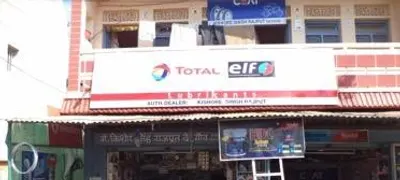
A family choosing a tractor engine oil, a motorcycle or a wedding venue in a district town makes the decision somewhere the average does not reach: at a counter, on a road they drive every day, on the word of a person they know. That is why rural demand keeps arriving through the kirana even as the ad market moves onto screens, and why the same money spent in the wrong place buys attention for nobody.
What the crowding means for a small advertiser
Take the 38% at face value. Small businesses spent ₹35,814 crore on digital ads in 2025, and they did it in the same auctions you bid in. That is not a finding about prices, which the report does not give, and it would be wrong to say costs are rising because of it. It is a reason to expect that competing on the bid alone gets harder each year.
What does not get crowded is the part nobody can bid on: the offer, the creative, the language, and how fast someone replies. That is where a business with a local advantage still wins, which is the argument behind reach outside the metros and behind testing whether a campaign caused the sale rather than sat next to it.
A sane way to use the number
Use the 64% as a question, not an answer. Ask where your own sales are decided, and build the split backwards from there.
Start from where the sale happens
A counter, a phone call, a search or an app. The split follows the decision, not the market average.
Measure what each rupee produces at your end
Enquiries, visits and sales in one list, not the platforms' own reports.
Keep one channel that creates demand
Search and retargeting harvest it; something else has to plant it.
Test by holding back
Switch a channel off in a few districts and see what the sales did.
Revisit twice a year
Rebalance on evidence, not on a headline about the average.
This is the working method of any digital marketing plan worth paying for. The report tells you where the market is going. Your own numbers tell you whether you should follow it.
Questions people ask
- How big is India's advertising market in 2026?
- The Madison Advertising Report 2026 forecasts ₹1,74,605 crore, up from ₹1,55,105 crore in 2025, which is roughly 13% growth by the report's own figures. The totals use an expanded definition that includes quick-commerce and small-business advertising.
- What share of Indian advertising is digital?
- Digital accounted for about 60% in 2025, at ₹93,156 crore, and is forecast to reach about 64% in 2026, at ₹1,11,976 crore. Traditional media is projected to grow only around 1%.
- Is television advertising disappearing in India?
- Linear TV advertising fell 5% in value and about 10% in volume in 2025. But TV and connected TV together were still ₹38,855 crore, and connected TV nearly doubled to about ₹6,000 crore. Spend is moving from broadcast onto connected screens rather than leaving television.
- How much digital ad spend comes from small businesses?
- In 2025, small-business digital advertising was ₹35,814 crore, about 38% of all digital ad spend. Small advertisers are a large part of the auctions on every major platform.
- Should a small business copy the 64/36 split?
- No. The split is an average across the whole market, dominated by categories that sell entirely online. Set yours from where your own customers decide, and test it against your own sales.
Read next
The TV ad that knows who is actually watching
A television ad used to mean paying for an audience you could only guess at. A connected TV ad is shown on the same screen, in the same living room, to someone the platform can actually identify.
The shelf moved into the app
For decades the most valuable advertising space in retail was eye level on the shelf. That shelf is now a search result inside a delivery app, and it is sold by the click.
Rural is carrying the growth. The kirana is carrying rural.
Brands planning around quick commerce and metro modern trade are planning around the part of the market that is growing slowest. The growth is in a district town, on a shelf behind a counter.