

A logo at the edge of the circle is not a brand experience
Sharad Navratri runs 11–19 October in 2026, nine nights of Garba across Gujarat and well beyond it. Most brands that sponsor a ground get a backdrop and a booth. The ones people remember get inside the circle.
7 min read
Why a Garba ground is not a normal activation crowd
Sharad Navratri 2026 runs from Sunday 11 October to Monday 19 October, with the main Garba weekends falling around the middle and end of that stretch. That's the calendar. The harder part is the crowd it draws, because a Garba ground behaves nothing like a mall, a market or a conference hall.
- 9
- nights of Navratri, 11–19 October 2026
- 20 October
- Vijayadashami / Dussehra
Source: calendardate.com, Navratri 2026
Everywhere else, an activation competes for attention against people who are on their way somewhere. On a Garba ground, the crowd is already committed — they came for hours of dancing, in a moving circle, with their attention on the rhythm and the person next to them, not on a stall. The rural activation problem of nobody walking past applies here too, but in reverse: the crowd isn't absent, it's already fully occupied by something more compelling than your booth.
A brand that treats this like a mall counter — a backdrop, a banner, a table with pamphlets to one side of the dance floor — gets ignored for exactly that reason. Nobody leaves a Garba circle to read a pamphlet.
The activation has to join the rhythm, not interrupt it
The formats that actually work on a Garba ground borrow the thing people already came for, instead of competing with it.
A branded interval, not a branded booth. The natural pause between rounds — when the DJ or dhol group changes tempo, or the ground takes a water break — is where a brand can hold the floor's attention for sixty seconds without fighting the dance for it. A short announcement, a costume contest, a quick prize draw tied to something the brand actually does.
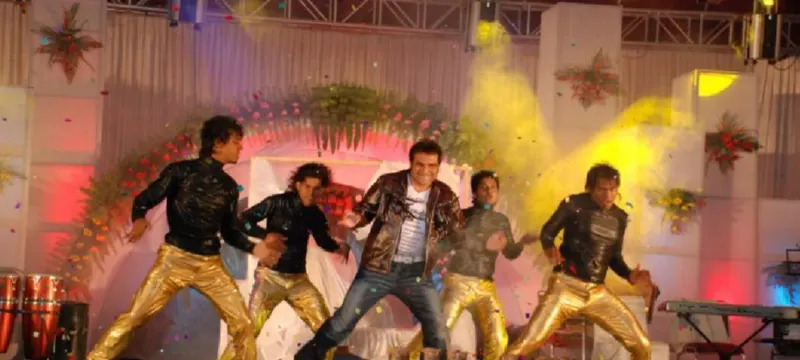
Costume and prop integration. Garba is already a costume event — chaniya cholis, dandiya sticks, colour-coded nights. A brand whose product or category has any plausible link to the look of the evening (colour, fabric, accessories, even the sticks themselves) can become part of what people are wearing rather than something bolted on beside them.
A sensory footprint, not a visual one. Most sponsor branding is designed to be seen. On a ground where everyone's eyes are on the circle and the stage, not the perimeter, what actually registers is closer to what people hear, smell or are handed — a distinct dhol pattern between songs, a scent at a refreshment counter, a small object worth keeping. Visual branding still matters for the photographs people take afterward, but it isn't the part that gets noticed in the moment.
A moment worth being photographed in. People at Garba are already taking photos and reels of themselves, all evening, without being asked. A backdrop or a small set piece designed to be genuinely good in a photo — not a logo wall, an actual scene — gets included in content people were making anyway, which is a very different thing from asking them to stop and pose for the brand.
Designing the circle-in, not the booth-beside
Pick the moment, not just the space
The interval between rounds, or a themed night, is worth more than a fixed booth location.
Give the crowd something to wear or hold
Not a leaflet. Something that belongs on a dance floor and travels through the evening with them.
Design for what's heard and handed, not just what's seen
Attention on a Garba ground is aural and social first, visual second.
Build the photograph, don't request it
A set piece good enough to be chosen, not a backdrop people are asked to stand in front of.
Decide the digital follow-up before the first night
Where does a captured contact go, and who reaches out afterward.
That last step matters as much as the on-ground design. The digital half of a phygital activation applies directly here — a WhatsApp number collected at a costume contest, followed up the next day, does more for a brand than a scan count nobody reads twice.
What to check before committing to a ground
Before any of the above, confirm what the organiser's sponsorship actually includes — operating hours, category exclusivity, what's provided versus what you bring, and how the ground defines its own attendance numbers. Experience design decides whether people remember the brand. The sponsorship terms decide whether you're allowed to build any of it in the first place, and that conversation has to happen first.
A brand activation on a Garba ground that works is not bigger than the ones that don't. It's built to be part of the dance the crowd already came for, rather than a stall they walk past on the way back to it.
Questions people ask
- When is Navratri and Garba in 2026?
- Sharad Navratri runs from Sunday 11 October to Monday 19 October 2026, with Vijayadashami (Dussehra) on 20 October. Garba and Dandiya nights run across those nine evenings, typically starting after sunset.
- Why don't normal activation formats work well at Garba events?
- A Garba crowd is already engaged in something — hours of dancing in a moving circle — that holds their attention more than a typical passing crowd would. A stall or backdrop competing with that gets ignored, whereas a format that borrows the evening's own rhythm (an interval announcement, a costume tie-in, a photo moment) can hold attention without fighting the dance for it.
- What kind of brands can activate well at Garba events?
- Brands with any plausible link to what the evening already involves — clothing, accessories, food and beverage, beauty, jewellery, event and hospitality categories — tend to integrate more naturally than an unrelated category forcing a presence. Fit with the occasion matters more than category size.
- Should the activation focus on visual branding?
- Visual branding matters for what gets photographed afterward, but on the ground itself, attention is dominated by sound, movement and social interaction, not signage. A design that only works as a static visual will be seen by relatively few people compared with one built into a moment the crowd participates in.
- How should a brand follow up after a Garba activation?
- Decide the follow-up channel before the first night, not after. A number or contact collected through a costume contest or a giveaway should be followed up within a day or two, the same discipline as any other on-ground lead capture — see connecting a physical moment to a digital follow-up.
Share this article
Read next
Navratri brand activation ideas: build a useful experience around the celebration
A Navratri activation should earn a few minutes of attention without getting in the way of the celebration. Choose a relevant experience, agree the organiser's boundaries and decide how you will measure useful engagement.
What works in a village does not work in a mall
In a mall you are competing with lunch. In a village you are competing with nothing at all — and that turns out to be a harder problem, not an easier one.
The QR code is not the strategy
An activation with a QR code on the backdrop is not phygital. It is an activation with a QR code on the backdrop. The join has to be designed, or there is no join.