

Three objections keep brands out of experiential marketing
Almost nobody argues against experiential marketing any more. The brands that still are not doing it give the same three reasons, and each one has a practical answer.
7 min read
The gap between wanting it and doing it
EY's April 2026 study of Indian brands found 88% of surveyed brands increasing their experiential marketing spend, and put India's live events market at roughly ₹13,000 crore in 2025. The marketing leaders surveyed reported that 78% of consumers prefer experiential interactions with brands.
The scale is visible on the ground. The same report counts more than 2,000 organised Navratri events across cities, and found that over 10 lakh people travelled for live events in the last two years, from nearly 1,200 cities.
- 88%
- of surveyed brands report increasing experiential spend
- 78%
- of consumers prefer experiential interactions, per the marketing leaders surveyed
- ₹13,000 cr
- India's live events market in 2025, approximately
- 29%
- of brands not yet active plan to launch within 12 months
Source: EY India, Why brands in India are turning to experiential marketing, 7 April 2026
That last figure is the one worth stopping on. Among the brands that were not running experiential campaigns, fewer than one in three planned to start within a year. Wanting it and doing it are different, and the report says what stands between them.
What the inactive brands say
Among the brands not yet active, three reasons account for nearly everything, and none of them is that experiential does not work.
- Lack of expertise71%
- Budget pressure57%
- Unsure how to measure ROI43%
Source: EY India, 7 April 2026
Each of the three is a fair objection, and each has an answer that does not involve a large first commitment.
Objection one: we do not know how
Seventy-one per cent is the biggest number on the chart, and it is the easiest to solve, because it is not a reason to build the capability. It is a reason to choose the right partner.
What you need to know is not how to run an activation. It is how to tell whether the people running it can. The questions that separate the two are practical and can be asked in a meeting: who from the pitch will be on site, whether the run sheet is real, what went wrong at the last one.
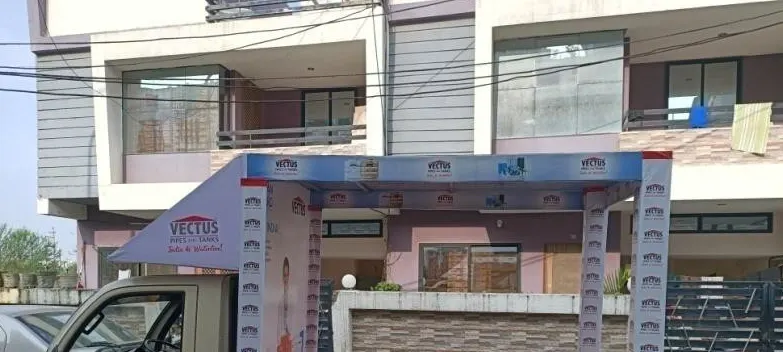
The format itself is less mysterious than it looks. The Vectus campaign was one idea in two vocabularies, a city retailer and a village haat, which is what most experiential work is: a message, a place, and something worth stopping for.
Objection two: it costs too much
Fifty-seven per cent cite budget, and they are right about one thing. Experiential is expensive per person reached. What it is not is expensive per person moved.
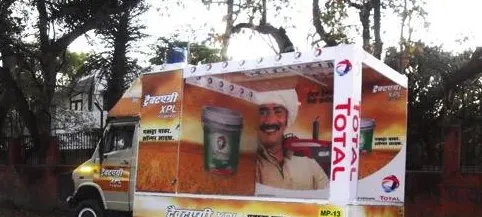
The mistake is to compare it with media that buys reach. A street performance in a market town will lose to a video campaign on cost per thousand, every time. That is the wrong contest. The tractor engine oil campaign used street theatre because the audience does not read advertising and does not stop for a brochure. It did stop for a show.
The way to lower the risk is to shrink the first commitment, not to skip it: one market, one format, one product that needs explaining.
Objection three: we cannot prove it worked
Forty-three per cent are unsure how to measure return, and this is the one where the answer is a habit rather than a tool. The problem is almost never that a measurement is impossible. It is that nobody decided what to measure before the build began.
The discipline is to write the number down before anything is built, and to compare against somewhere that did not get the activation. That is the same logic as the test for whether an ad actually caused a sale, applied to a stall instead of a campaign.
A first campaign that answers all three
The three objections have one thing in common: each is a reason to start small and start deliberately, not a reason to wait.
Pick one market and one format
Answers the budget objection. A single town, a single mechanic, a single product.
Choose the partner by their answers
Answers the expertise objection. A real run sheet and a real account of the last thing that went wrong.
Write the number before the build
Answers the measurement objection. Contacts collected, redemptions, or enquiries, decided in advance.
Compare with a market you skipped
The only honest comparison a single campaign can offer.
That is the practical shape of any experiential marketing engagement worth starting: small enough to afford, specific enough to measure, and run by people who can show how.
Questions people ask
- What does EY's 2026 study say about experiential marketing in India?
- EY's April 2026 report found 88% of surveyed brands increasing their experiential spend and put India's live events market at about ₹13,000 crore in 2025. Marketing leaders surveyed said 78% of consumers prefer experiential interactions with brands.
- Why do some brands not do experiential marketing?
- Among brands not yet active, EY found 71% cite a lack of expertise, 57% budget pressure, and 43% uncertainty about measurement and return. Only 29% of those brands planned to launch within twelve months.
- How big is the live events market in India?
- EY's report estimates it at approximately ₹13,000 crore in 2025. It also counts more than 2,000 organised Navratri events across cities, and found that over 10 lakh people travelled for live events over two years, from nearly 1,200 cities.
- How can a small business start with experiential marketing?
- Start with one market, one format and one product that needs explaining, choose a partner who can show a real run sheet, decide the number to measure before anything is built, and compare with a market you did not activate.
- How do you measure the return on an experiential campaign?
- Decide in advance what should be different afterwards: contacts collected with permission, coupon redemptions or enquiries traceable to the activation. Then compare against a similar market where nothing ran. Footfall on its own is not a result.
Read next
How do you prove an activation worked?
The event went well. Everyone says so. There are good photographs. Now finance wants to know what it returned, and nobody wrote down the one number that would have answered them.
Choosing an event management company: eleven questions to ask
Every agency shows you the same photographs. These are the questions that actually tell you which one will be standing next to you at 6am on the setup day.
How we launched a tractor engine oil with puppets
TRACTAGRI XPL had to reach farmers across seven states. Farmers do not read advertising, and they do not stop for a brochure. They do stop for a show.